Drama therapy in Montreal
A deeper look into drama therapy.
I use expressive arts therapy to support a more authentic connection to the self, especially when words are no longer sufficient.
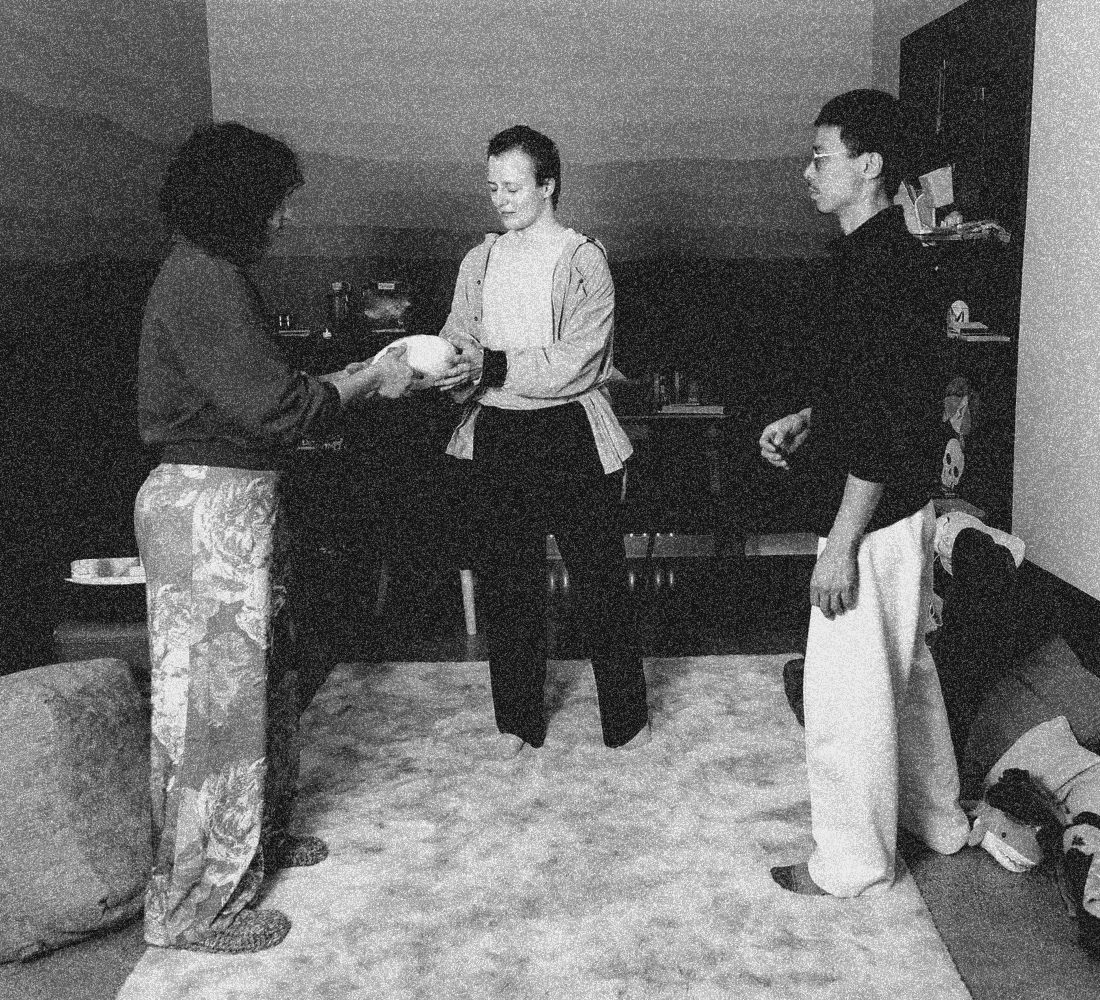
About drama therapy
What is drama therapy?
Drama therapy is a type of mental health therapy. It combines talking with creative and embodied methods. It is a form of creative arts therapy that uses both words and the body to support healing and emotional expression.
In drama therapy sessions, we may use movement, stories, images, objects, sounds, sensations, and talking. The tools used depend on your needs, goals, and comfort level.
We use words whenever possible. However, sometimes words are not enough. When that happens, drama therapy offers other ways to express what you feel and experience.
What can I expect in a drama therapy session?
Every drama therapy session is different. The process is adapted to your needs, goals, and pace. A session usually has three parts.
We start by checking in. This is a moment to arrive, ground yourself, and decide what you want to focus on.
Then we explore one or more themes. This can include talking, movement, stories, images, or other creative tools. The tools are always adapted to you.
We end by reflecting on the session. We may summarize what came up and create a gentle transition back to daily life. This can be verbal or creative.
You do not need to make eye contact or to just talk about your feelings here. We can work through imagination, silence, creativity, humor, movement, sensory grounding, or simply being together.
Is drama therapy right for me?
Drama therapy may be right for you if it is hard to say how you feel, or if your words do not match what you feel inside. It can also help if you feel far from your emotions or from your body experiences.
It supports you to better understand what you feel, in a simple and gentle way. We work together at your pace.
Maybe loud noises feel overwhelming, trust feels difficult, or the world itself can feel harsh and scary while others seem to move through it with ease. I work with queer, trans, neurodivergent, and highly sensitive people, honoring spiritual dimensions of experience, in a soft and authentic way.
What are the benefits of drama therapy?
Drama therapy can support many emotional, relational, and life challenges. Examples of what drama therapy can help with include building new social skills, expressing and communicating your needs, reducing symptoms of anxiety and depression, grieving and mourning loss, improving self-esteem and confidence, working through relationship difficulties, coping with life transitions and change, and gaining new perspectives and understanding.
I am committed to helping you understand depression, anxiety, trauma and violence, relationships, and trans health.
Drama therapy benefits can vary from person to person, depending on your needs and goals.
How can drama therapy help me?
Together, we’ll build tools for connecting to your essence, sensing and expressing your emotions, and feeling safer in your being.
You might use creative tools (like images or drawing) to create distance from difficult feelings, so you can understand them more clearly. Or you might use creative tools (like movement or body awareness) to feel and notice your emotions more clearly.
We can explore your inner ‘parts’ — overwhelm, shutdown, intensity, tenderness — without needing to suppress or silence anything.
You can learn more about your emotions and how to cope with them, and walk out with simple tools you can use outside of sessions. These tools are adapted to your needs, comfort level, and goals.
What are the main approaches used in drama therapy?
Depending on your needs and goals, different drama therapy approaches are used.
- Narrative drama
- Reclaiming and reshaping the stories you tell about yourself and others.
- Play therapy
- Using play and creative expression to explore thoughts and emotions that are difficult to put into words.
- Myth and fairy tales: the story within
- Exploring a story that interests you, using senses and body awareness to understand why it matters to you and what feelings it brings up.
- Role method
- Clarifying the roles you take on in daily life, and exploring which roles you may want more of or less of.
- Developmental Transformations (DvT)
- An improvisation-based technique that explores your relationship with life’s uncertainty and instability.
- Rehearsals for Growth
- Practicing difficult situations through role-play and creative methods.
- Sociodrama
- A group-based drama therapy technique used to explore and practice collective and social issues.
- Psychodrama
- A group-based drama therapy technique used to explore and work through personal situations.
Practical questions
Do I have to act or perform?
No. Drama therapy is not about performance or being good at art. You do not need any artistic skills. There is no right or wrong way to do it.
I draw on a range of tools depending on your needs: movement, play, imagination, imagery, scene work, and symbolic exploration. The tools are always adapted to you, in a process that respects your pace, your boundaries, and your way of being.
What should I bring or wear?
Come as you are — uncertain, still becoming. You don’t need to bring or prepare anything.
We may use movement, so wear something you can move in. The room has blankets and pillows.
What happens in the free consultation?
It’s 30 minutes together, free, to discuss your needs and the therapeutic process. Bring any questions you have about my approach, or just see if we work well together, or feel our vibe. It’s not required to get started: you can also book a session directly.
Book a time online, or email me.
In person or online?
Both. Sessions are available in person at Mouvement Intérieur – Centre for Drama Therapy and Social Theatre, in Old Montreal, or online via video call or phone. Whatever feels best for you.
The office is at 225 Notre-Dame West, 3rd floor, 5 to 10 minutes from Place-d’Armes and Square-Victoria metro stations. There is a waiting room and inclusive restrooms.
Teletherapy is available throughout Canada, the United States (not NY), and France.
How much does it cost?
- Individual sessions
- $160 (taxes included) / 50 minutes
- Relationship sessions, for couples, polycules, friends, and other relational dynamics (2+ people)
- $200 (taxes included) / 50 minutes
- Parent check-in session
- $85 (taxes included) / 30 minutes
- Strategy session
- $160 (taxes included) / 50 minutes
There is a sliding scale from $115. Please contact me if costs are a barrier.
Can I get insurance receipts?
Drama therapy sessions may be eligible for insurance reimbursement, depending on your coverage, under counselling or naturopathy receipts.
I am a Certified Canadian Counsellor (CCC #10005040) with the CCPA, and a member of the Academy of Naturopaths and Naturotherapists of Canada (#21-6579).
What languages do you work in?
Sessions are offered in French or English.
Groups run in English, but you’re welcome to express yourself in French or Japanese, since I speak French and Asa speaks Japanese.
What ages do you work with?
Ages 7 to 100.
Please feel free to share your needs with me.
Book a free consultationLet’s connect via email: fgall.dramatherapy@